

STEM toys: why magnetic building blocks help kids learn
Oct 4 2 min read Kiddopea Team
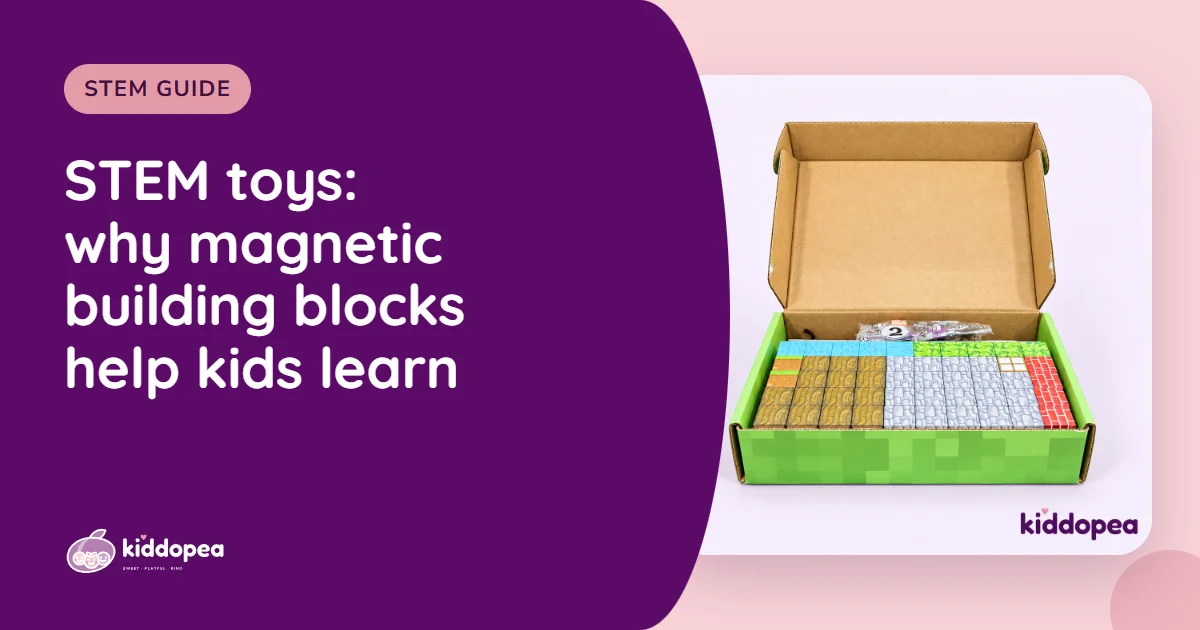
Magnetic building blocks help children learn shapes, balance, counting and planning while they play. Because the pieces snap together from any side, even young children can build something that stands, and that early success keeps them building and learning.
STEM stands for science, technology, engineering and maths. It sounds like school, but for a young child it starts on the floor of the living room, with a pile of blocks.
Why magnets make building easier
Plain plastic blocks need careful stacking. A small push and the tower falls, and a three year old gives up.
Magnetic blocks hold on to each other from any face. The child can place a piece slightly crooked and it still sticks. That means the first tries succeed, and success is what makes a child try again.
What children learn while building
Shapes and space. Children learn which pieces fit where, how a square becomes a cube and how walls make a room.
Balance. A tall tower needs a wide base. Children find this out themselves after the third collapse, which teaches it better than any explanation.
Counting and patterns. How many blocks for each wall? Can the roof alternate two colours? Maths appears without anyone calling it maths.
Planning. Before building a house with a door, the child has to think about where the door goes. Planning ahead is a skill they will use everywhere.
Patience. When something falls, they rebuild it a little differently. That is how engineers work too.
The Build World set
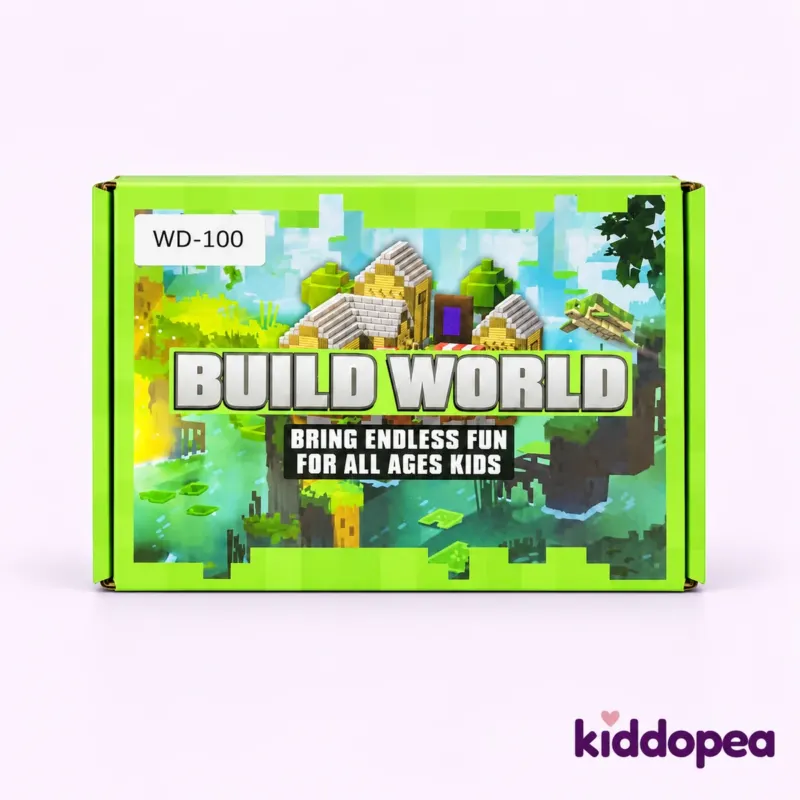
The Build World Magnetic Building Blocks set has 100 chunky blocks in a pixel style that older children recognise from building games. It builds houses, towers, characters and whole landscapes, then comes apart in seconds.
It costs ৳2,000, suits ages 3 to 10 and includes a bag of extra parts. It contains small parts, so keep it away from children under three.
How to play together
Start with a challenge, not instructions. Ask: can you build a house for this doll? Can you make a tower taller than the chair?
Build next to your child, not for them. Make your own small model and let them copy or change it.
Talk about what happens. Why did it fall? What if we make the bottom wider? Questions teach more than answers.
Keep a photo of the best builds. Children love seeing what they made last week, and it gives them ideas for the next one.
How long children play with it
A three or four year old will usually build for 20 to 30 minutes at a time. By six or seven, many children build for an hour or more, and start telling stories with what they built.
Delivery
The set is delivered across Bangladesh. Delivery is 80 taka in Dhaka and 150 taka elsewhere, and free on orders over 3,000 taka. You can pay cash on delivery or by bKash.
Shop the products
Building & STEM
Build World Magnetic Building Blocks
No reviews yet, be the first
৳2,000
৳2,500
Questions parents ask
What age are magnetic building blocks for?
From 3 years. The Build World set is made for ages 3 to 10. It contains small parts, so it is not for children under three.
Are magnetic blocks educational?
Yes. Building teaches shapes, balance, counting and planning, and it builds patience, because a structure only stands when the child thinks it through.
How many pieces does a child need?
About 100 pieces is enough for houses, towers and small landscapes for one or two children. The Build World set has 100 blocks plus a bag of extra parts.
More guides

Oct 5 2 min read
Doll set price in Bangladesh: three gift sets compared
Doll gift set prices in Bangladesh compared: what each Kiddopea doll set includes, which age it suits, delivery charges and which one to choose as a gift.
Read the guide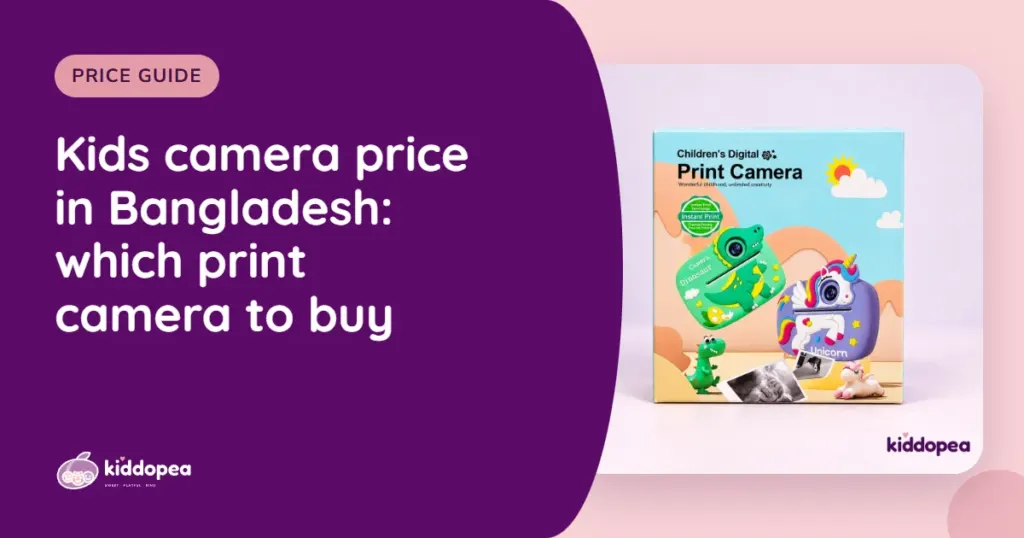
Oct 5 2 min read
Kids camera price in Bangladesh: which print camera to buy
Kids print camera prices in Bangladesh compared: what each camera costs, what is in the box, running costs, delivery charges and which one suits your child.
Read the guide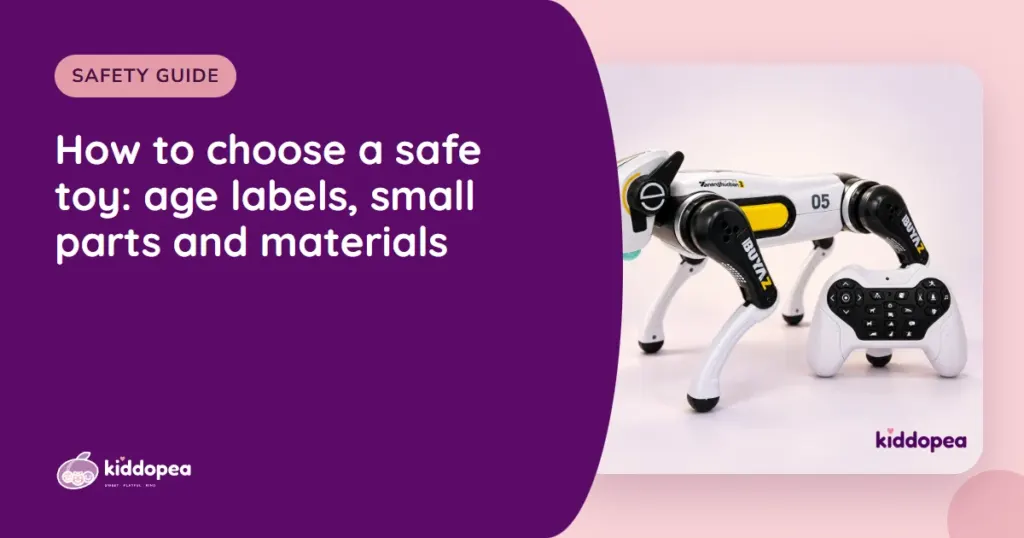
Oct 4 2 min read
How to choose a safe toy: age labels, small parts and materials
A simple checklist for safe toys in Bangladesh: what age labels mean, the small parts rule, magnets, batteries and materials, and how to check a toy at home.
Read the guide